
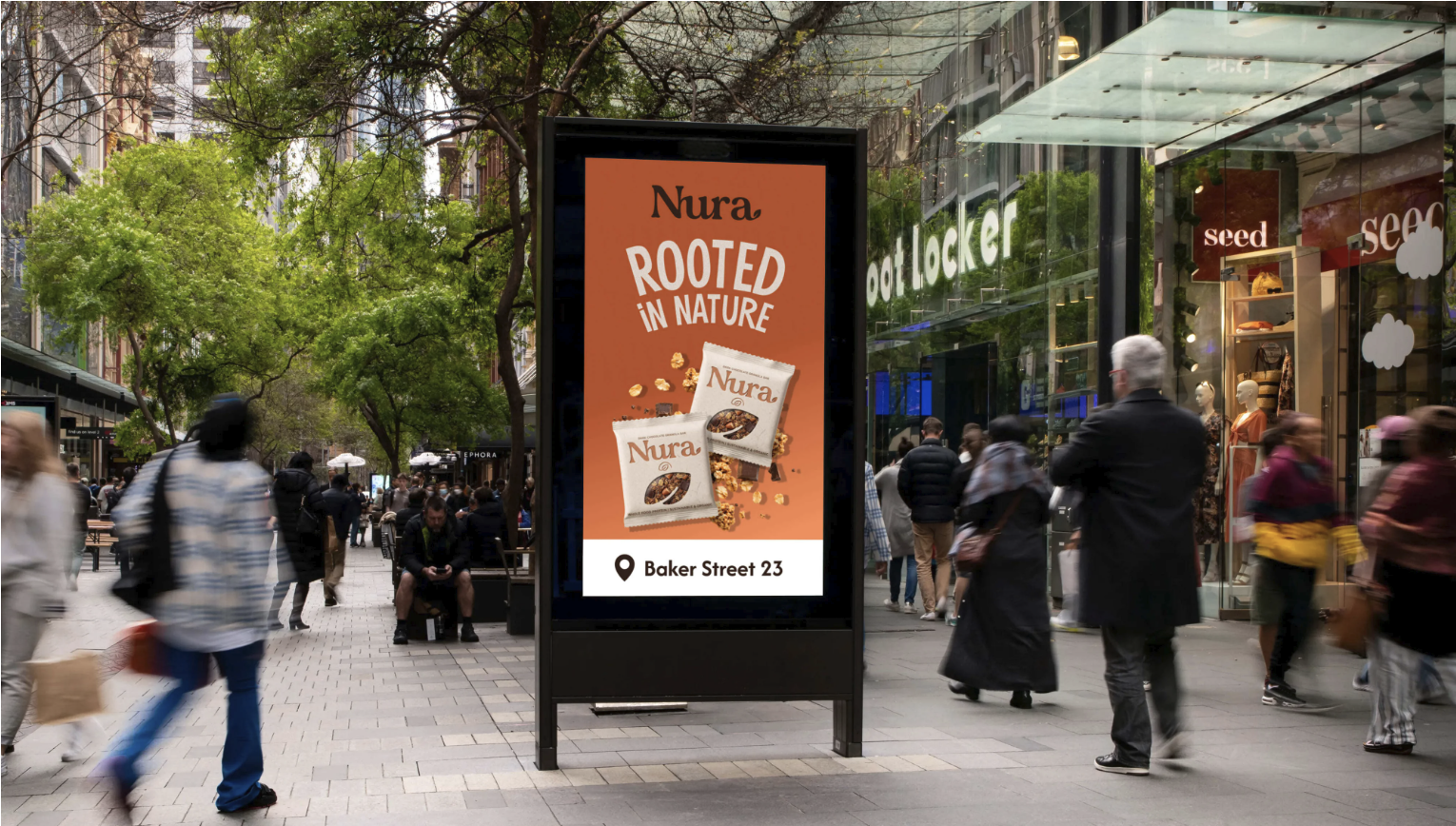
Where you put the store locator matters: new research on DOOH creative. A 7,200-person study from Vistar Media, Omnicom Media and Annalect found that a well-placed store locator on a digital out-of-home screen can more than double purchase intent for impulse products, without hurting how people feel about the brand
"Find your nearest store" is one of the most common additions to a digital out-of-home (DOOH) ad. Until now, there has been very little evidence on whether it changes behaviour, or where on the screen it should sit. New research from Vistar Media's Creative Studio, with Omnicom Media and Annalect, puts numbers on it, and the answer is that small creative choices make a big difference.
How the study worked
Researchers surveyed 7,200 consumers aged 18–59 using a forced-exposure design. Each participant saw an outdoor scene featuring a vertical (1080 x 1920) digital screen running a campaign ad. Participants were split into four groups: a control ad with no store locator, and three versions with the locator placed at the top, middle or bottom of the creative.
The study covered three categories:
- Retail: grocery, home improvement and apparel
- Quick service restaurants (QSR)
- Consumer packaged goods (CPG), including impulse buys such as confectionery
It measured visit intent (retail and QSR), purchase intent (CPG), brand recognition, brand appreciation and ad appreciation.
What they found
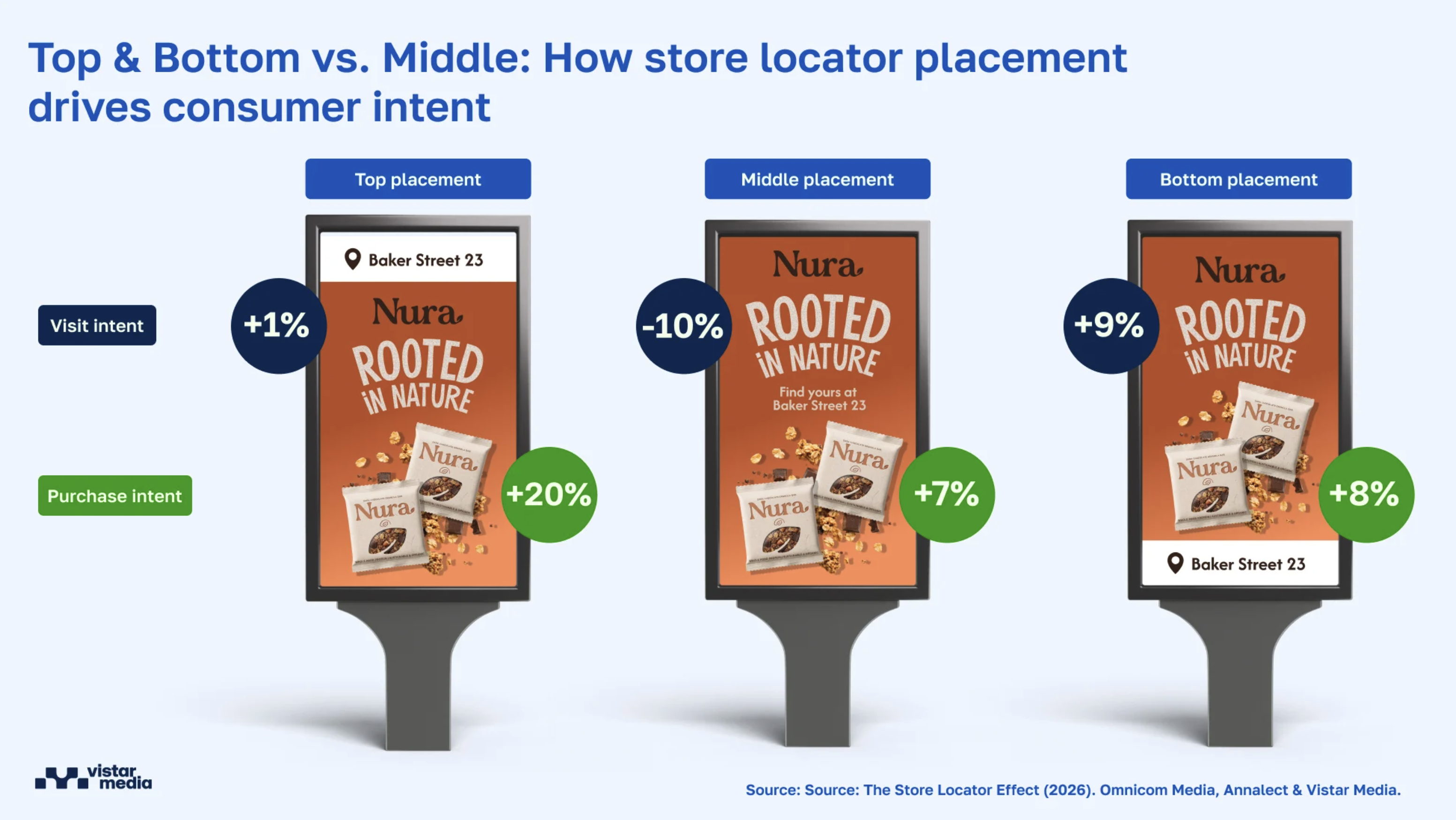
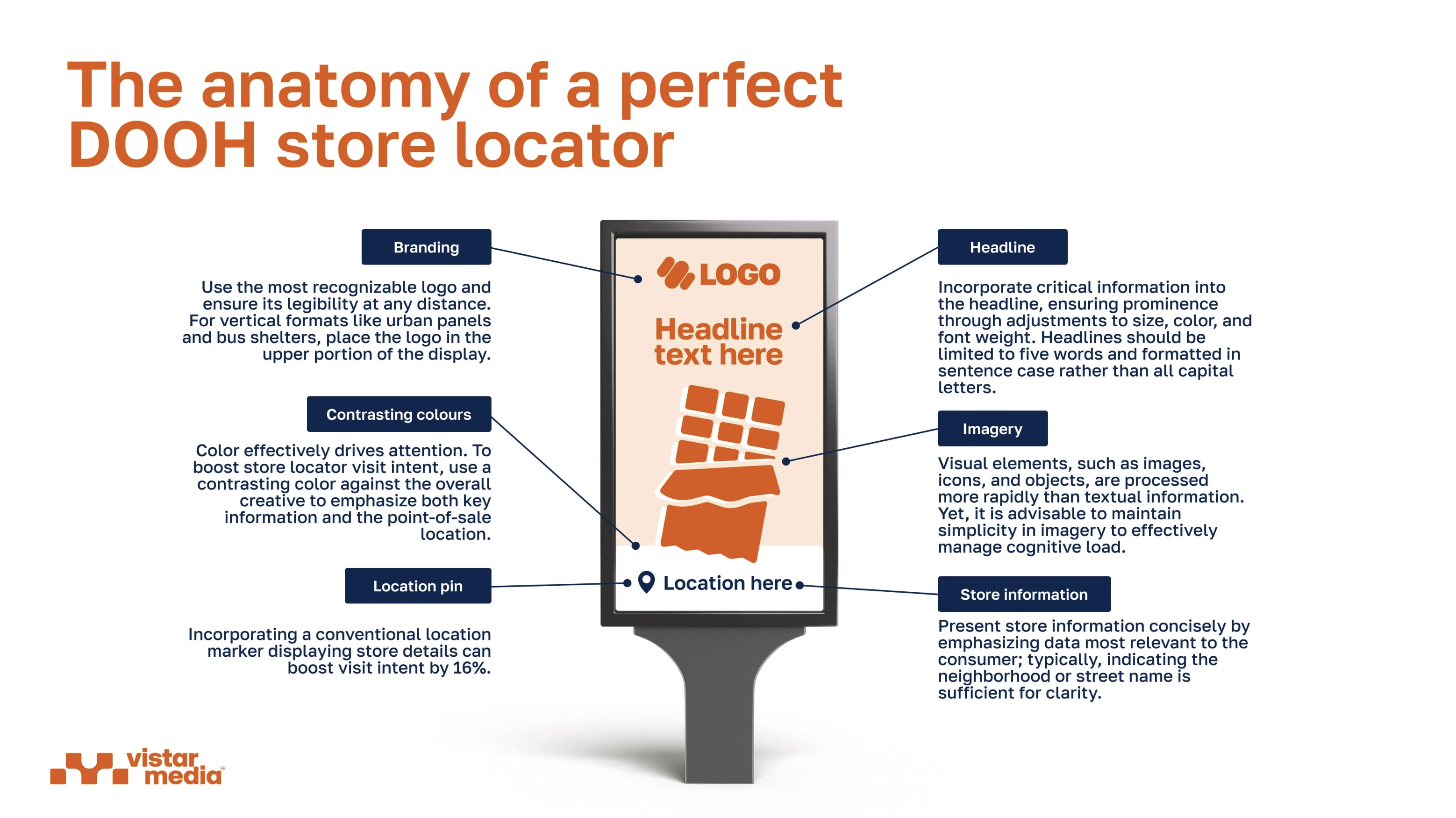
Top and bottom placements performed best overall. The middle position was less consistent, likely because the locator competed with the headline and imagery for attention.
Some categories saw even stronger results
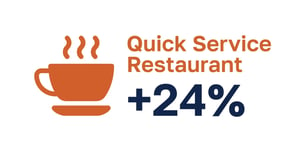
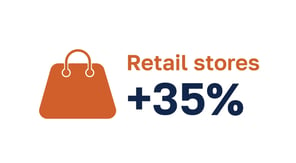
Store locators lifted intent across the board, but some categories responded especially well. The pattern is clear: a store locator earns its place on screen when the consumer can act on the message straight away.

|
|
|
| Consumer packaged goods: Purchase intent rose 116% with bottom placement and 110% with top placement. |
Quick service restaurants: bottom placement lifted visit intent by 24%. |
Retail: placing the locator at the bottom of the ad increased visit |
Design details made a difference too
|
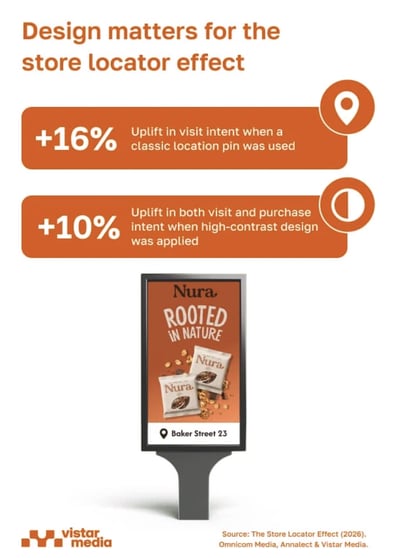
Adding a familiar location pin icon lifted visit intent by 16%,
Just as important, adding store information did not reduce brand appreciation or ad appreciation. The one caution: featuring a reseller's details can split attention and lower recognition of the advertised brand, which matters most for newer brands still building awareness.
|
|
What it means for New Zealand marketers
This is EMEA research rather than local data, so NZ results may differ. Still, the lessons translate well to anyone planning DOOH here, whether on roadside, retail or transit screens.
- Put the locator at the top or bottom. Avoid the middle, where it fights the headline and hero image.
- Make it easy to spot. High contrast and a familiar pin icon both lifted intent on their own.
- Prioritise the right categories. Retail, QSR and impulse-buy CPG saw the strongest gains.
- Protect brand-building work. For emerging brands, think carefully before giving a reseller's logo prime real estate.
- Test on your own formats. The results reflect one screen format and set of creatives, so treat them as evidence of impact, not a universal rule. Programmatic and dynamic creative make it simple to trial variations and measure the difference.
Read the full research from Vistar Media: The store locator effect in programmatic DOOH.
%20(1).png "TVNZ & Adobe Integrate with Real-Time CDP Collaboration")
.jpg "LUMO Expands Subtle Motion Into Tauranga and Christchurch")







Comments