
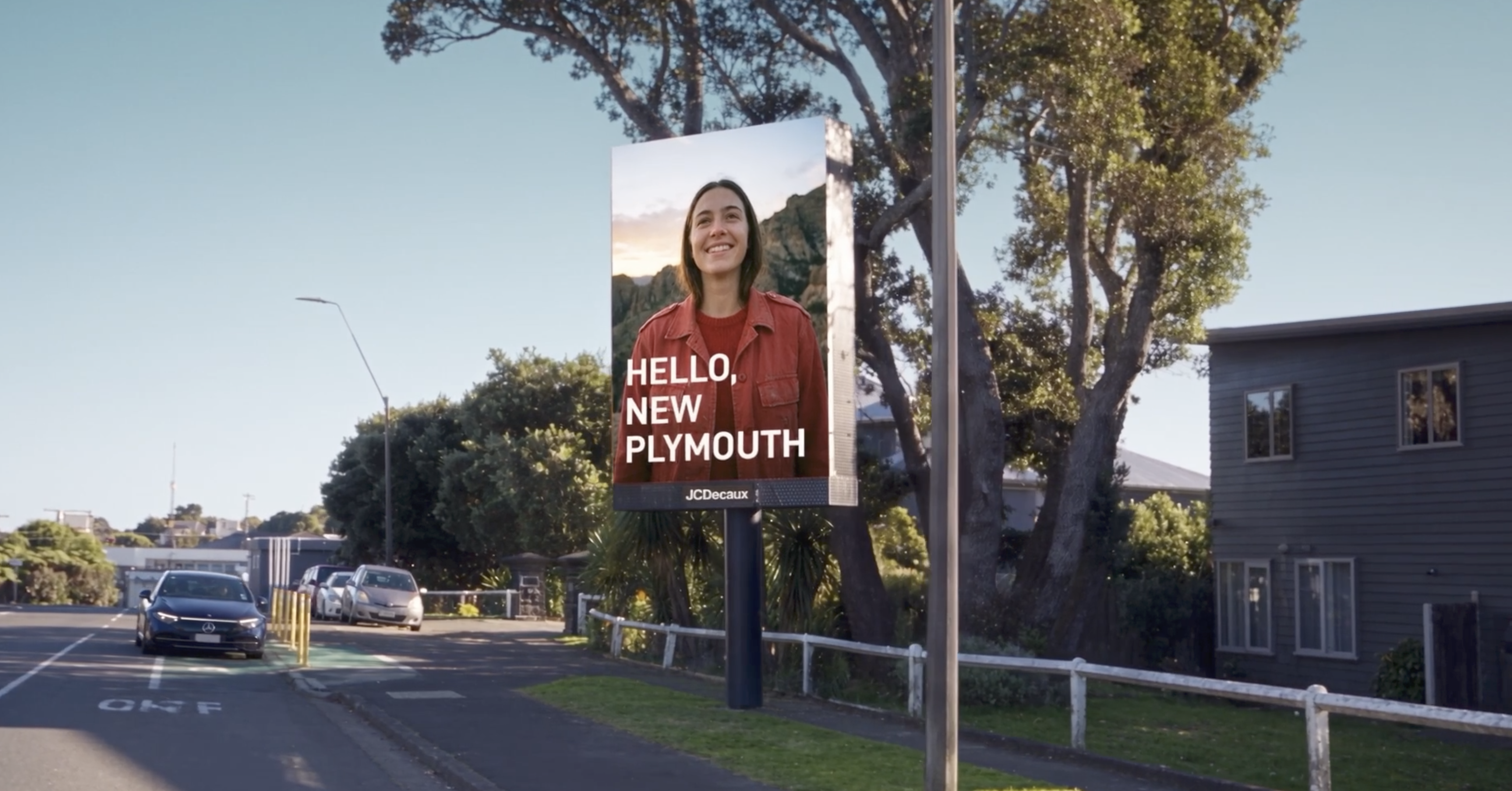
As an industry, we’ve spent years building sophisticated national plans across TV and digital – search, social, programmatic display, video. In the metros, Out of Home has joined that ecosystem, with digital and programmatic OOH becoming a natural extension of online strategies. But in regional New Zealand, much digital thinking is still anchored in an old assumption: city audiences are “advanced”, regions are “nice to have” slow adopters. In 2026, that assumption no longer holds – and it’s costing brands reach and ROI
 Author: Victoria Parsons, Insights & Strategy Director, JCDecaux
A recent JCDecaux deep dive into non-met audiences, shows that regional centres aren’t a step behind the big cities. They’re using the same platforms, devices and services as people in central Auckland and doing so with the same expectations around convenience, relevance and quality
from brands.
Use of tech products, in the ‘several times each day’ category, for non-met audiences is only a few percentage points behind city folk. And their digital in-device brand avoidance abilities are pretty close too. Our research shows a higher quality of life, as does another recent study naming Dunedin as one of the best places to live in New Zealand.
Yes, income profiles can look slightly different on paper. But regional households aren’t carrying the same housing costs or the daily financial and emotional tax of commuting, parking and time lost spent in traffic.
Remove these pressures and you get something that matters to digital planners: more discretionary spending, more headspace, and more appetite for lifestyle, retail, dining, automotive and financial services. Add the ability to work remotely in “city” roles from regional locations, and you get an audience that behaves very much like the urban cohorts most digital strategies are built around.
Behind that is a structural shift in the regional economy:
- Farm-tech firms are scaling fast to meet international demand, creating high‑skill, globally connected roles
in regional hubs. - Manufacturing has modernised, with advanced operations based outside the big three cities.
- Universities and specialist institutes anchor talent and innovation in places that previously used to be treated
as peripheral. - Immigration is increasingly landing in the regions, bringing new businesses, services and energy into local economies – a major growth frontier for banks, insurers and other national brands.
For IAB New Zealand members, this should be a clear signal: regional audiences already are your digital audiences. They’re in your national Meta, Google, Trade Me, TikTok and programmatic buys. What’s been missing is a premium, data‑enabled
Out of Home layer that can be planned and optimised with the same tools and logic.
It is this ease and agility, coming to fruition on a quality, modern screen in thriving regional settings.
JCDecaux SMARTFRAME changes the picture
SMARTFRAME brings metro‑grade digital OOH into regional New Zealand: elevated, close to the road, fully digital, and integrated with programmatic buying platforms. In practical terms, that means:
✔️ You can extend existing digital plans into regional DOOH using the same DSPs, data foundations and optimisation logic you already use for display and video.
✔️ You can build genuinely national strategies that treat metro and regional audiences as part of one modern, connected landscape, rather than separate “tiers”.
✔️ You can activate dynamic, data‑driven creative – dayparting, triggers, audience segments – on premium screens
in markets that have historically been absent from programmatic OOH.
Crucially, the expected “regional resistance” to billboards simply isn’t there. In many centres, especially secondary metros, our study shows the opposite. People embrace premium DOOH as a marker that their city is evolving, joining the same contemporary visual conversation as Auckland, Wellington and Christchurch; particularly those in the secondary mets like Hamilton and Tauranga.
When the environment is well‑designed, a SMARTFRAME doesn’t feel like clutter or intrusion; it indicates that the place is on the map, modern and thriving.
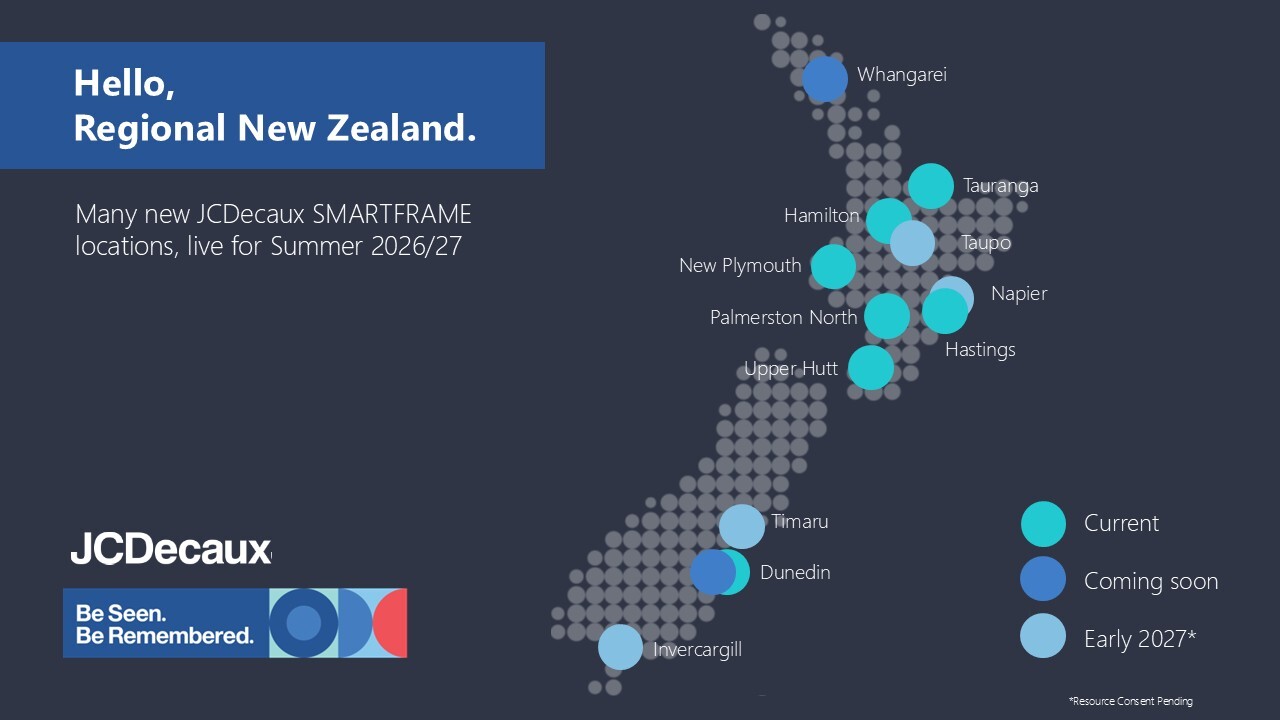
For digital planners and programmatic specialists, that has three important implications:
- Each impression works harder. Regional landscapes are less cluttered. A programmatic DOOH impression on SMARTFRAME is competing with fewer OOH voices, supporting faster penetration and stronger share of voice.
- You can drive incremental reach and frequency efficiently. Regional DOOH via SMARTFRAME reinforces audiences you’re already reaching online without requiring a separate, analogue planning workflow.
- You can shift from “metro‑only” to genuine national coverage. With premium digital OOH in more than 10 locations and growing, and accessible via programmatic, regional New Zealand moves from fringe to core in your omnichannel strategy. TV, online and DOOH can finally work together at scale across the whole country.
The take away is simple: regional audiences are living connected, digitally-fluent lives - our planning should reflect that. With SMARTFRAME now available programmatically in the regions, the opportunity to join the dots between online and Out of Home – and to unlock new growth in under‑served markets – is sitting right in front of the IAB community.
The question is whether we keep treating the regions as an afterthought, or start building national strategies that reflect the New Zealand that actually exists today.
If you want to know more about regional audiences, and how they compare to city audiences – across a range of behaviours and measures, reach out, I’d be happy to come and share our research with you.
Read more from our Executive General Manager Phil Eastwood on regional reach opportunities here.
.jpg "LUMO Expands Subtle Motion Into Tauranga and Christchurch")
.png "QMS NZ Deliver Owned NZ First Programmatic DOOH Takeover")


%20-%20White.png "Momentum Logo (Large) - White")




Comments