

Last year, the IAB New Zealand Digital Audio Effectiveness Group released the Digital Audio Buyers Guide: a resource designed to help media planners and buyers better understand the role digital audio can play within the modern media mix. This year, they are building on that work through a series of articles exploring the evolving audio landscape in greater depth. This third and final article addresses a persistent misconception: that digital audio is operationally complex to buy. It isn't.
The first article, Digital Audio is Bigger Than Most Media Plans Reflect, examined the scale of digital audio within
New Zealand's broader audio ecosystem. The second, Digital Audio is More Effective Than You Think, explored how to drive effectiveness across the full marketing funnel. This article turns to the practicalities of putting digital audio into
your plan.
There are two ways to approach digital audio
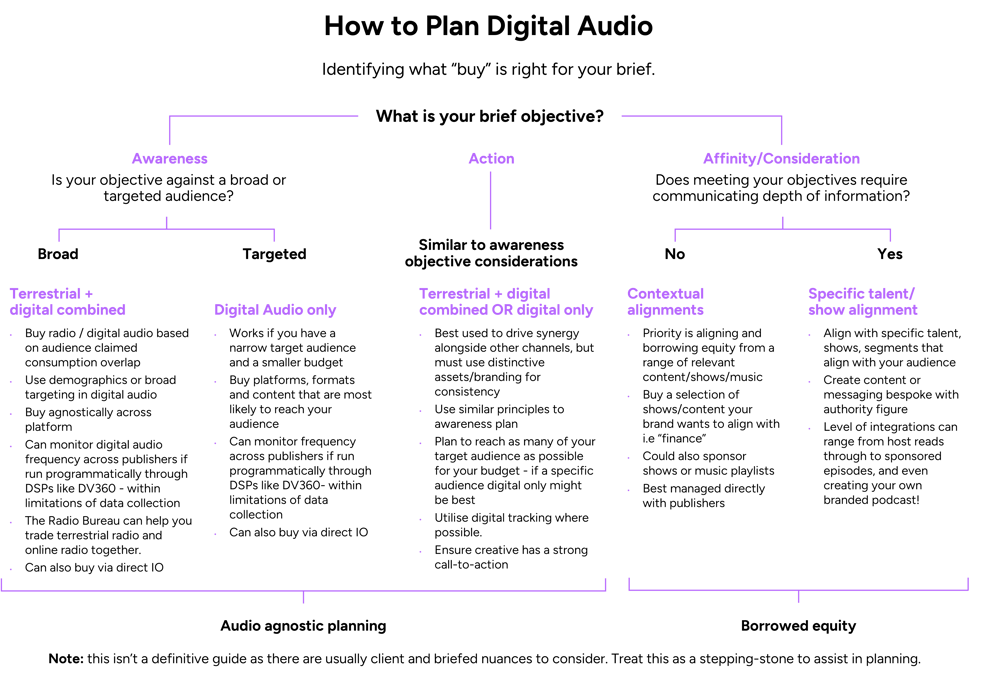
How you approach digital audio depends on your objective. Start with what you want to achieve, and the right approach follows.
For awareness or action objectives, an audio-agnostic buy usually works best. This means buying across platforms and formats to build reach and frequency, with digital audio treated as part of the wider audio plan rather than a separate line item. Use terrestrial radio as your base and digital audio to "top up" your target audience, as you would with AV. Digital audio delivers incremental reach among audiences radio doesn't cover, particularly younger listeners.
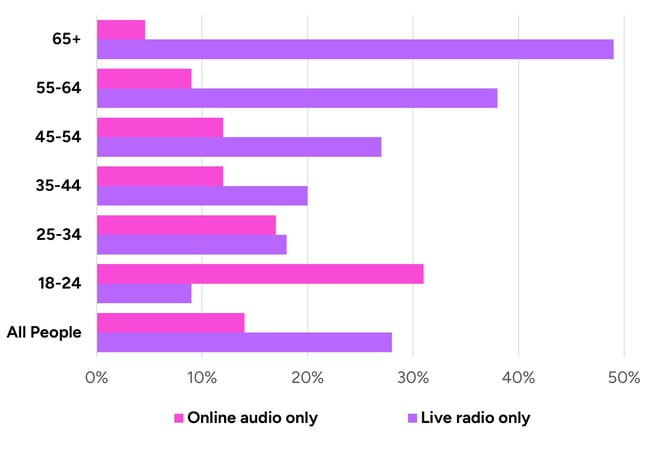
There is no industry tool yet for measuring the incremental reach digital audio adds to a plan. However, 14% of
New Zealanders can only be reached through digital audio (Nielsen CMI), which is a useful guide for budget allocation.
In future, we hope the industry will adopt a holistic measurement tool.
For consideration or affinity objectives, digital audio lets you borrow equity. Aligning with specific content, shows or talent means your brand benefits from the trust those creators have built with their audiences. A finance podcast could suit a bank, for example, or a fitness show a sports nutrition brand. Your message arrives in a context that's already credible.
One campaign can do both. Audio-agnostic buying builds reach, while borrowed-equity placements support consideration. Both map to standard campaign objectives, so there's no new discipline to learn.
It comes down to two questions: what's the objective, and who's the audience? The flowchart below can help.
The buying infrastructure is already in place
Digital audio is often left out of plans not because of budget, but because of a belief that it needs a different process, desk or skill set. It doesn't.
Digital audio can be bought via direct IO, programmatic guaranteed, private and preferred deals, and open exchange: the same transaction types used across other digital channels. The desk handling the rest of the digital plan can handle digital audio too.
Audio-agnostic plans use standard audio ads, which work across all four transaction types. Programmatic buyers can access digital audio through the same buy-side and sell-side platforms they already use, with some format-specific data and measurement considerations. The barrier is perception, not process.
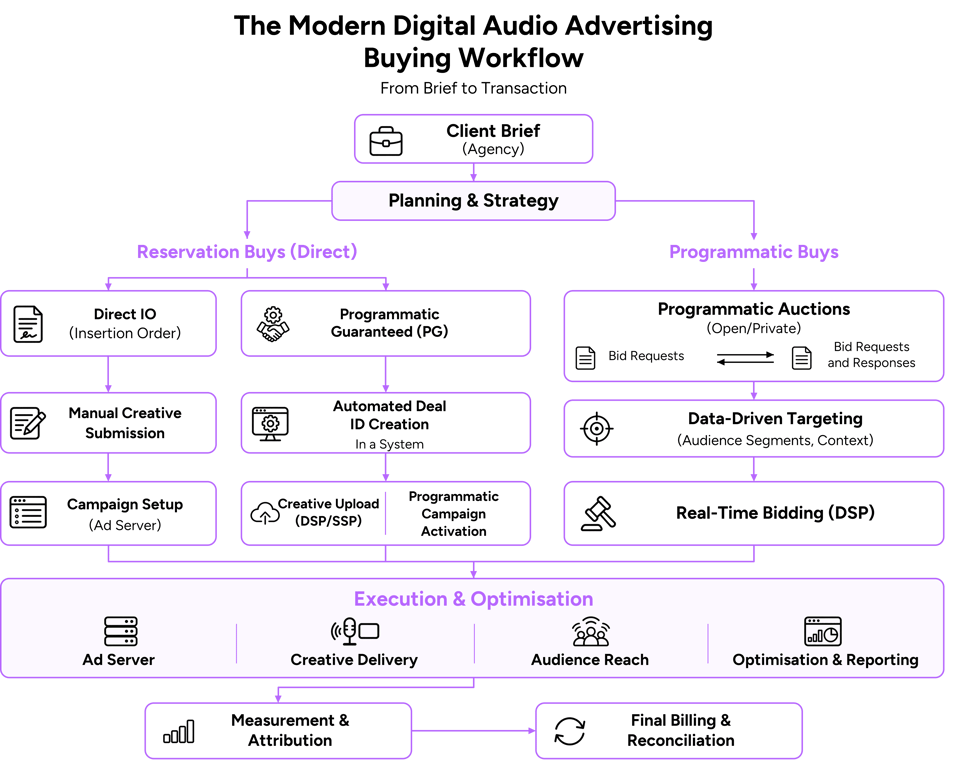
Borrowed-equity plans benefit from working closely with publishers. They know their inventory and talent, and can advise on the contextual and talent-aligned placements that will deliver against your objective.
The Radio Bureau simplifies buying terrestrial and digital together
For planners unsure how to buy across terrestrial and digital, The Radio Bureau (TRB) can help. TRB can buy terrestrial radio, online radio and podcasts together, so an audio-agnostic plan doesn't require three separate buying processes.
This reflects how New Zealanders listen: most use both terrestrial and digital audio. Planning for the full audio audience and buying through a single point of contact removes much of the friction from combined buys.
The barriers that made digital audio hard to buy five years ago have largely gone. What's left is mostly habit.
For a deeper look at how to approach digital audio planning, buying and measurement, download the IAB New Zealand Digital Audio Buyers Guide.
Read the earlier articles in this Digital Audio series:
-
Part 1: Digital Audio is Bigger Than Most Media Plans Reflect
- Part 2: Digital Audio is More Effective Than You Think
Thank you to the contributing members of the IAB New Zealand Digital Audio Working Group for this article:
Kate Grigg, Head of PMX New Zealand, Publicis Media Groupe | Chair IAB New Zealand Digital Effectiveness Council
Nick Henderson, Lead Revenue Solutions, Magnite
Hannah Merritt, Strategy Director, PHD Aoteroa (Working Group Lead)
Sarah Catran, Head of Digital, NZME
Brendan Ginnever, Strategy Director, OMD
Scott Hughes, Director, Attentiv Media