
Trade Me's 2026 Circular Economy Report is more than a snapshot of secondhand shopping - it's a window into how New Zealand consumers are thinking about money, sustainability, and digital commerce right now. For IAB New Zealand members planning campaigns and media strategy, there's a lot to work with.
New Zealand's circular economy has reached a tipping point. The report reveals that homes across Aotearoa are sitting on a collective $5.2 billion in sellable, pre-loved goods - and the digital channels that connect buyers and sellers are at the centre of that shift.
The $1,300 opportunity in every home
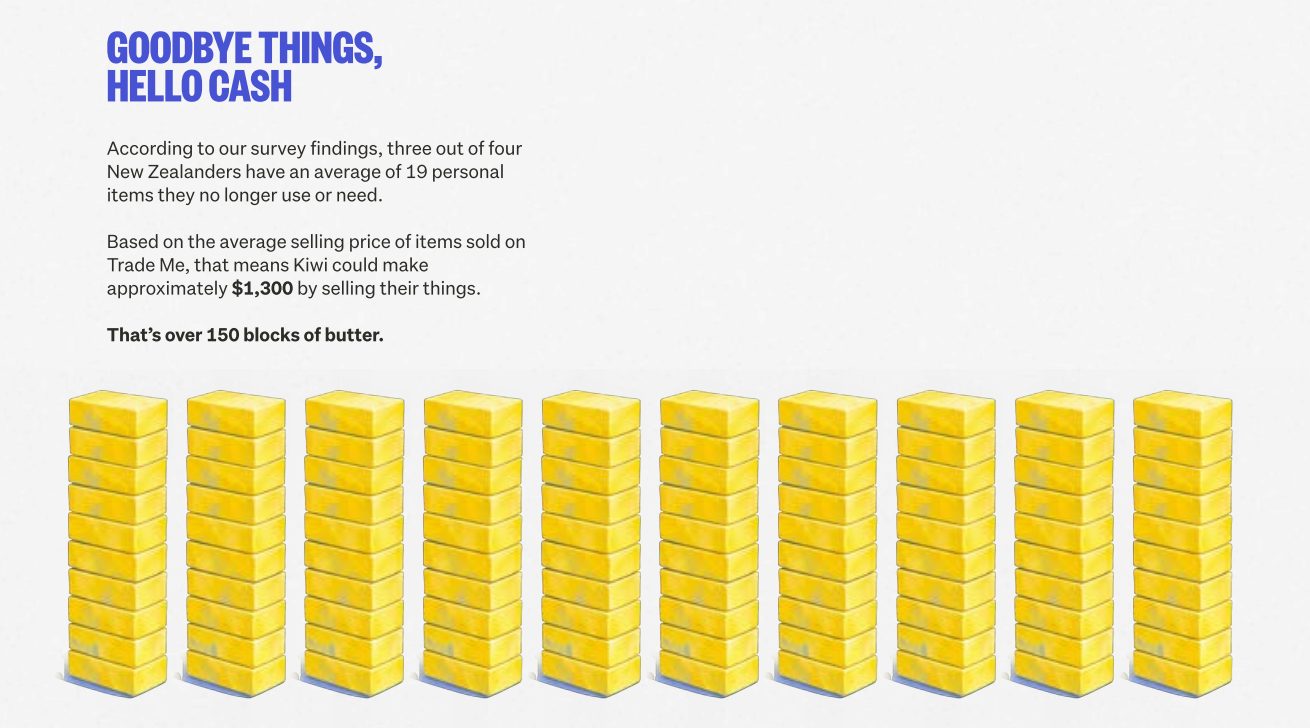
The numbers are striking: 75% of New Zealanders currently have unused items gathering dust. That translates to approximately 76 million items nationwide ready for a new home, with the average Kiwi holding onto 19 sellable items worth around $1,300.
For many households, $1,300 isn't pocket change - it's a flight to see family, a buffer against rising bills, or a kickstart for savings goals," says Lisa Stewart, Head of Trade Me Marketplace. "We're seeing Kiwis realise that the answer to financial pressure might just be sitting in their spare room or garage."
For advertisers, this signals a consumer who is actively looking for ways to reduce spend and generate income - a mindset that should be informing value messaging across many categories, not just marketplace.
Cost of living drives secondhand momentum
Financial pressure continues to fuel the shift toward secondhand commerce. 64% of Kiwis say the cost of living has made them consider buying or selling pre-loved items more often, up 4 percentage points from last year.While intent is high (72% plan to sell unwanted items), only 43% have actually sold something in the last six months. That gap between intention and action is a classic digital advertising opportunity - the right message, at the right moment, on the right platform.
Gen Z and Millennials lead the charge
Younger New Zealanders are treating their clutter as a side hustle. Those aged 24-39 are the most engaged demographic:
- 83% have offloaded items in the last six months
- 51% have actively sold or attempted to sell recently - the highest of any age group
- 76% say cost of living pressures have increased their secondhand activity
- 43% are upcycling or repurposing items specifically to resell
This generation isn't just decluttering - they're viewing unused goods as liquid assets," Stewart notes.
For members targeting this cohort, the implication is clear: value and sustainability are not competing messages for this audience, they're the same message.
Sustainability meets savings
83% of New Zealanders have purchased a pre-loved item in the last six months, with over half (52%) now considering sustainability when making purchases. Women are leading adoption, with 20% purchasing 10 or more secondhand items in a six-month period. This is a creative and brand consideration well beyond the marketplace category. Consumers who are actively extending the life of goods are also scrutinising the brands they buy new. Sustainability credentials are becoming table stakes across retail, fashion, and technology categories.
The path forward
63% of people are willing to buy refurbished items, and 56% are extending the life of household goods through upcycling and restoration. As economic and environmental pressures converge, New Zealand's circular economy is shifting from trend to mainstream habit - and digital advertising is the primary channel through which that behaviour is being shaped and accelerated.
Download the full 2026 Circular Economy Report to explore regional insights, category trends, and opportunities in New Zealand's $5.2 billion secondhand market









Comments