
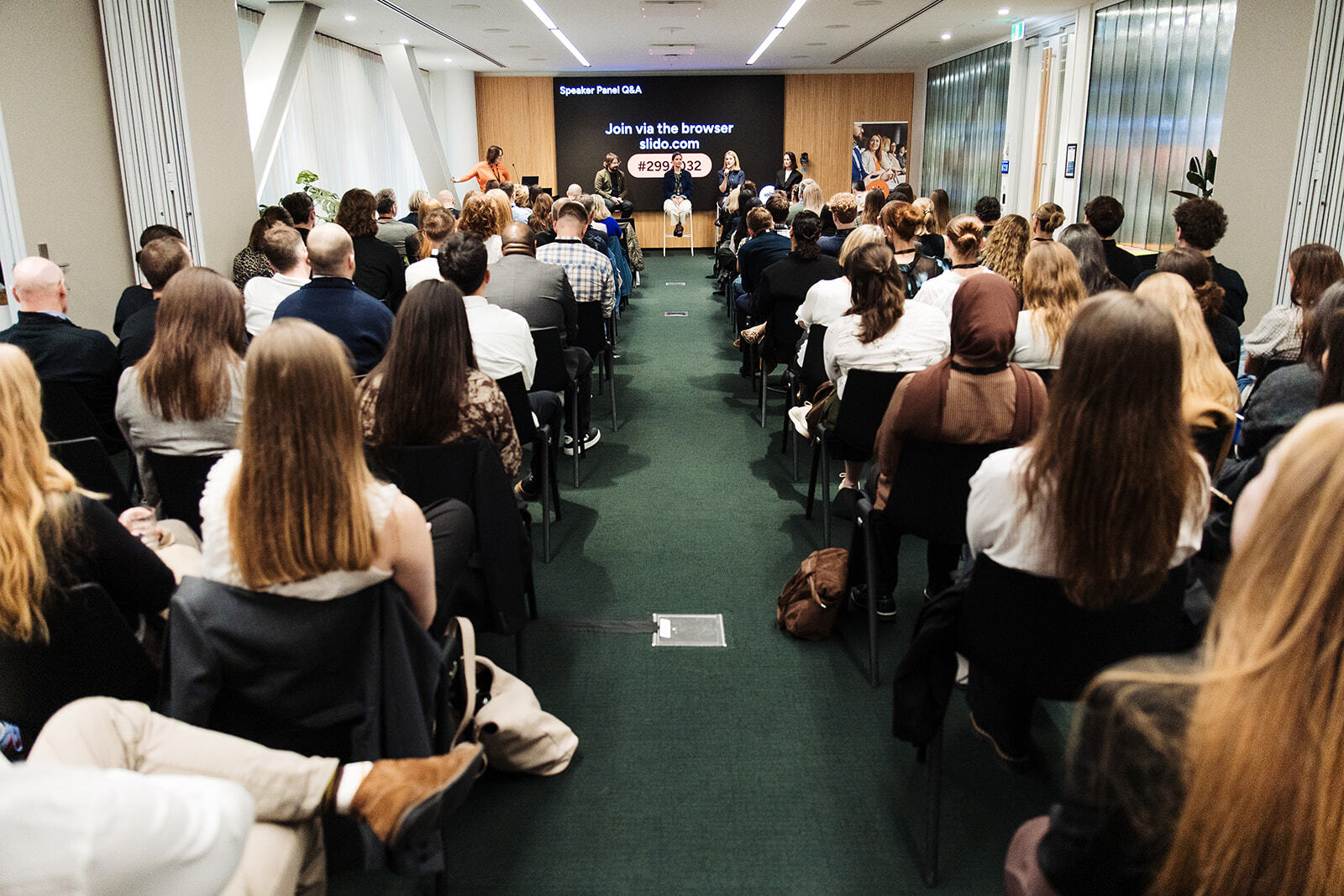
IAB New Zealand's Wellington Council celebrated its launch with its first event 'Capital Connect' to focus on strengthening Wellington's public and private sector marketing and advertising connections to the national digital advertising industry. Wellington is the one place where central government and the fast-growing digital advertising industry sit side by side and this event opened up the connections and conversations that proximity makes possible.
Capital Connect, the IAB New Zealand Wellington Council's inaugural sold out event, opened with co-chair Paul Halford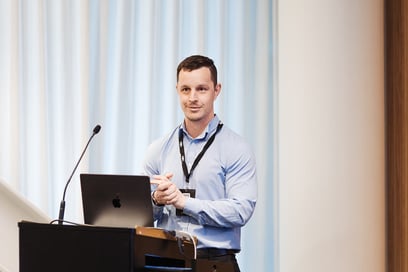 (MPI) making the case for Wellington being genuinely different with the way the advertising industry works. Hon Andrew Little, Mayor of Wellington preferred "unique" to "different," pointing to Wellington's identity as a city of science and the value of public and private marketers sharing a room. Either way, the scene was set for moderator Kathryn Robinson (Verian Group) to run the two panels.
'Change Agents' How public sector marketing can leverage opportunities to drive behavioural change.
The first panel title ‘Change Agents’ initially wrestled with what "behaviour change" means to different agencies. Broadly categorising it as ‘encouraging mundane, socially beneficial actions people wouldn't necessarily choose’ or ‘a measurable, sustained shift in people’s habits or attitudes’. EECA's Russell Duncan pushed back on the term itself, preferring to frame it as ‘reframing choice’ rather than social engineering.
On the similarities with the commercial sector, behaviour change was described as akin to entering a new commercial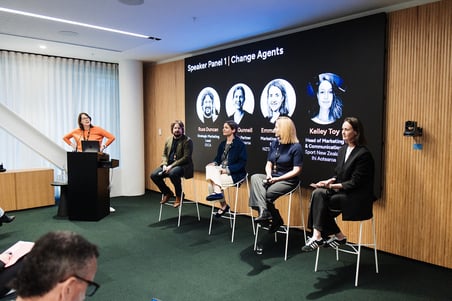 category without a traditional competitive set. NZTA's Emma Hartley felt commercial cause-and-effect is tidier, with Behaviour change focused on far longer-game measurement. Duncan noted conversion doesn't always have to mean a purchase, with shorter indicators like calculator use or content engagement signalling important progress instead - progress towards a lofiter, longer term goal or outcome .
On public sector digital constraints, especially when it comes to data use, Anna Gunnell from Bastion Aotearoa described the "creepy or not" test and staying mindful of taxpayer-spend headlines; Kelley Toy of Sport New Zealand pointed to tighter guardrails and transparency; ‘is this the right thing to do?’ While Duncan noted the sector holds huge amounts of data, but pushing too hard with its use risks losing trust.
Hartley argued for moving beyond transactional relationships into genuine partnership; government acting as one client rallying around shared outcomes rather than individual agency or brand attribution. Duncan pointed to partnerships already working well, in areas such as solar and smoke alarms - meeting New Zealanders where they are, treating people as humans, not customers.
On ROI, the advice was not to fear modelling, and to remember behaviour change needs multiple interventions and a systems-level approach. Duncan said proven ROI obviously helps with the next budget round, but urged realistic expectations: "promise the world, hope for the best." It was broadly agreed that smaller budgets demand more research so the investment gets the best chance of working as hard as it can.
“Is behaviour change some times over modelled as part of campaign planning?” asked the audience. And as we’d expect from the political capital, “Sometimes…” came back as the answer, with a consensus that dourly sticking to a set behavioural model wasn’t necessarily the right way to proceed. Better to test, trial and improve than force a model from the outset.
The Efficiency Edge: Wellington's biggest digital advertising opportunities for effectiveness and efficiency.
The second panel turned to efficiency and AI. Asked what's holding back first-party data use, Diana Marsh (Wheako Pōneke Experience Wellington) pointed to the audience relationship sometimes sitting with a third party like Ticketmaster. Google Cloud's Rob Hawthorne said the weakest link in the data chain is usually where the real problem sits, with the real gap being outcome-based skills, and privacy remaining a major brake. Matt Bale from media agency Together, argued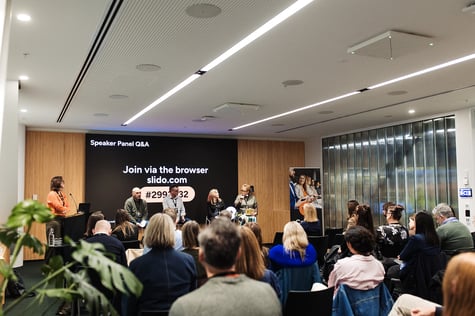 technology was never really the constraint - the challenge is turning data into useful decisions. Privacy is now an expectation - especially relevant in the public sector. Privacy is an organisation's social licence to operate.
On the question of targeting, ACC's Helen Mills - dubbed "the Queen of Trust" for the afternoon, argued missing a click is fine, but risking trust erosion is not. As a public agency, trust needs to lead every digital decision. Which means challenging and critical thinking are more important than ever in keeping a real-world focus when planning.
In response to where the focus of organisations should be and what digital advertising skills they need, consensus was around the real issue being clarity on where human versus machine judgement sits, since machines are currently efficient, but can be "strategically stupid." The emerging skill is knowing when to trust AI, challenge it, or ignore it.
And a low-risk way to bring AI into public sector media planning, buying & creative? “Keep it in the passenger seat, not behind the steering wheel” said Bale.
And five years from now? No surprises to hear a majority talk to an "AI engine room" overseen by human judges, with huge watchouts on trust, ethics and copyright. The real skill sitting in the inputs; signals, taste, psychology, etc.
Audience questions closed things out. Asked if a fully AI-generated ad would happen again soon? Mills said no – ACC is at least five years from trusting AI creative. Marsh said her organisation would push boundaries regardless. Bale offered that "the next election is AI," noting 46 government agencies already use it, and stressed the need for a clear judgement line for transparency.
Kathryn Robinson closed the discussion with a fitting summary: technology is undeniably becoming more effective, but who holds judgement and who maintains trust is what matters most, especially for the public sector. Council Co-Chair Kaitlin Mitchell (MBM) wrapped up the event with closing comments.
.jpg?width=455&height=303&name=260903_IAB-233%20(1).jpg)
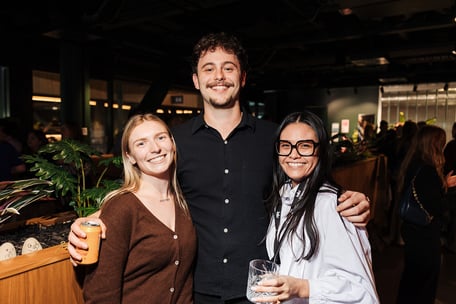
Thanks to NZME for their generous support (and bar tab). You may spot yourself or your friends in the event photo gallery.
We look forward to the next event in the capital 🎉
What would you like to see discussed next as part of bringing public and private sector conversations together? We’d love your thoughts - let us know at hello@iab.org.nz
Thank you to the members of the IAB New ZealandWellington Council who co-created this article:
Paul Halford, Manager Campaigns Public Affairs | Ministry for Primary Industries - Manatū Ahu Matua (Co-Chair)
Matt McNeil, Managing Director, The Media Lab
Kate Thomson, Head of Media, VML Wellington